Texas sports betting legalization is receiving renewed attention following major political changes in the state’s 2026 elections.
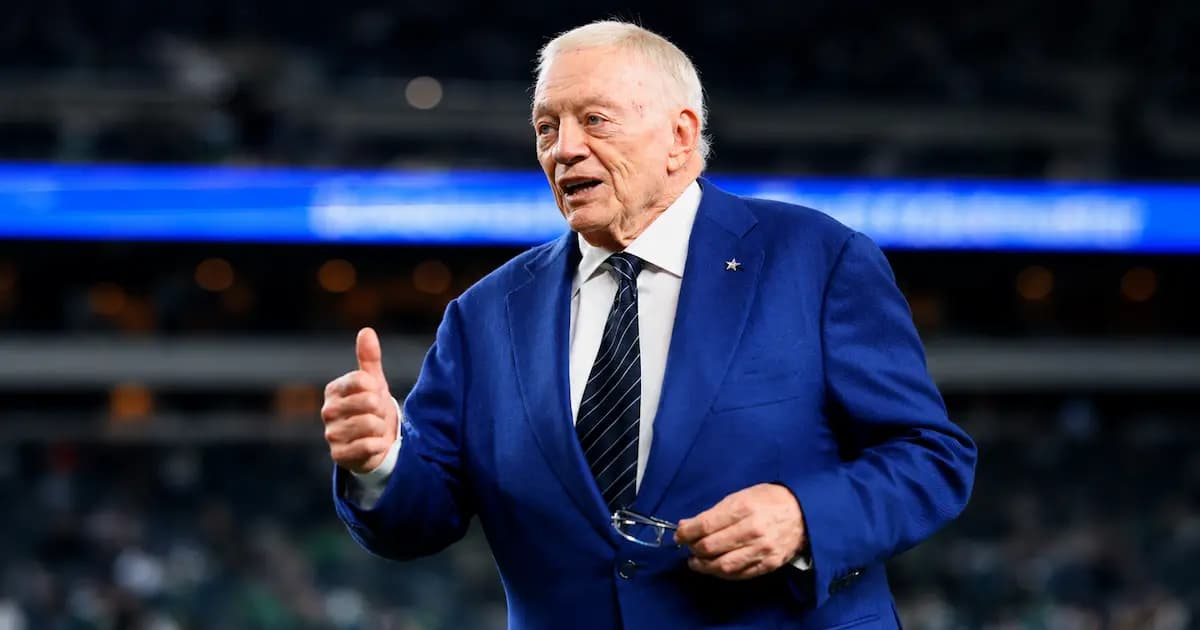
Dallas Cowboys owner Jerry Jones believes the election results could create a new opportunity to legalize sports wagering.
On November 3, Democrats won several important statewide races, including governor and lieutenant governor.
The victories changed the political landscape in a state that has repeatedly rejected proposals to legalize sports betting.
During a radio interview on November 6, Jones expressed support for regulated sports wagering in Texas.
However, legalization would still require approval from state lawmakers and voters.
Jerry Jones Supports Texas Sports Betting Legalization
Jerry Jones has long supported the idea of legal sports betting in Texas.
During his weekly appearance on Dallas radio station 105.3 The Fan, the Cowboys owner discussed how recent political changes could affect the gambling industry.
Jones said sports betting already takes place among Texas residents, even though the activity remains illegal under state law.
He believes a regulated market could provide greater oversight.
According to Jones, legalization could also help protect consumers, generate tax revenue, and support the integrity of professional sports.
Why Does Jerry Jones Support Legal Sports Betting?
Jones believes that gambling activities are easier to monitor when they operate under a legal framework.
Licensed sportsbooks would have to follow state regulations, including requirements related to customer protection and betting activity.
Jones also suggested that regulation could help authorities identify suspicious wagering behavior.
He described legal sports betting as a positive opportunity for Texas.
However, these are Jones’s views about the potential benefits. The actual effects would depend on the regulations adopted by the state.
Texas Election Results Change the Political Landscape
The November 3, 2026 elections brought significant changes to Texas politics.
Democrats won several major statewide positions previously held by Republicans.
One of the biggest results came in the governor’s race.
Democrat Gina Hinojosa defeated Republican Governor Greg Abbott.
Hinojosa will become Texas’s first Latina governor and its first Democratic governor since Ann Richards.
Another important result came in the lieutenant governor’s race.
Democrat Vikki Goodwin defeated Republican incumbent Dan Patrick.
Patrick had been an influential opponent of expanded gambling in Texas.
Goodwin has supported allowing voters to decide whether casino gambling and sports betting should become legal.
Other Important Election Results
The elections also brought changes elsewhere in Texas politics.
Democrat James Talarico defeated Republican Ken Paxton in the US Senate race.
His victory marked the first time a Democrat had won a US Senate election in Texas since 1988.
Democrats also gained control of the Texas House of Representatives.
However, Republicans retained their majority in the Texas Senate.
These results could change how gambling proposals are considered during the next legislative session.
Nevertheless, the new political leadership does not automatically mean sports betting will become legal.
Why Is Sports Betting Still Illegal in Texas?
Texas remains one of the states that prohibit regulated sports betting.
Residents cannot legally use state-licensed mobile sportsbooks or visit licensed retail sportsbooks within Texas.
Several legislative proposals have attempted to change the law in recent years.
However, those efforts have failed to secure the necessary support.
One major obstacle has been opposition within the Texas Legislature.
Previous Sports Betting Proposals Failed
In 2023, the Texas House approved a proposed constitutional amendment concerning sports betting.
However, the proposal did not advance through the Senate.
Another attempt to expand gambling stalled during the 2025 legislative session.
Former Lieutenant Governor Dan Patrick had repeatedly expressed concerns about gambling expansion.
His departure from office could change the way the Senate considers future proposals.
However, incoming Governor Gina Hinojosa has not announced a detailed sports betting legalization plan.
She also voted against the 2023 sports betting amendment.
This means the positions of Texas’s new political leaders are not identical.
What Must Happen Before Texas Can Legalize Sports Betting?
Texas sports betting legalization would require more than a normal legislative vote.
Under the constitutional amendment process, lawmakers must first approve a proposal to change the Texas Constitution.
The proposed amendment would then be submitted to voters.
Three Steps Toward Legalization
1. Approval by the Texas House
At least two-thirds of the Texas House of Representatives must support the proposed amendment.
With 150 members, this requires at least 100 votes.
2. Approval by the Texas Senate
The Senate must also approve the proposal by a two-thirds majority.
With 31 members, at least 21 votes are required.
3. Approval by Texas Voters
After both legislative chambers approve the amendment, the proposal goes to a statewide vote.
A simple majority of voters participating in the amendment election must support it.
If approved, lawmakers would still need to establish the rules governing licensed sports betting.
These could include sportsbook licensing, taxation, consumer protections, and regulatory oversight.
The next regular Texas legislative session begins in January 2027.
Therefore, supporters may have another opportunity to introduce sports betting legislation during that session.
How Could Legal Sports Betting Affect Texas?
Supporters and opponents of legalization disagree about its potential effects.
Jones and other supporters believe regulated sportsbooks could create additional tax revenue.
They also argue that legal gambling platforms could provide consumer safeguards that unlicensed operators may not offer.
Supporters believe these protections could make sports betting easier to monitor.
However, critics raise concerns about gambling-related financial harm and addiction.
They also question whether additional gambling revenue would justify the possible social costs.
Consumer Protection and Sports Integrity
One of Jones’s main arguments focuses on protecting the integrity of sports.
He believes legal sportsbooks could operate under clearer rules and monitoring systems.
For example, regulators could require operators to report suspicious betting activity.
These measures could help sports leagues and authorities investigate potential problems.
However, legalization would not eliminate every risk connected with gambling.
Effective oversight would depend on how Texas designs and enforces its regulations.
What Comes Next for Texas Sports Betting?
The 2026 election results have created a new political environment for the Texas gambling debate.
Jerry Jones hopes these changes will encourage lawmakers to reconsider regulated sports wagering.
The election of Vikki Goodwin as lieutenant governor is particularly important because she has supported giving voters a say on gambling expansion.
However, several obstacles remain.
Supporters must secure two-thirds approval in both legislative chambers before a constitutional amendment can reach voters.
Republicans also continue to control the Texas Senate, meaning bipartisan support would be necessary.
Even if lawmakers approve a proposal, Texas voters would have the final decision.
For now, sports betting remains illegal in the state.
The January 2027 legislative session will provide the next regular opportunity to reconsider legalization.
Until then, Jerry Jones’s comments highlight renewed interest in Texas sports betting legalization, but no legal change has yet been approved.